Please visit this page to view a 10-Year celebration Video for Reality Labs & Reality Labs Research, and this link to read more about Display Systems Research my team and I were involved in.
As a Design Manager on the Reality Labs Research Design Team, I lead a multidisciplinary design and prototyping team inside a world-class technology research organization focused on the future of human-oriented computing.
We work directly with Research Scientists and both hardware & software Engineering to explore the intersection of AR/VR, spatial computing, optics, display technologies, contextual and behavioral AI, and new form factors and interaction models—turning early technical signals into tangible experiences that help inform future products.
My role is to bridge research ambition and human value: shaping bold concepts, building experiential prototypes, and helping emerging technologies become more legible, useful, and meaningful for people.
Unfortunately, one of the downsides of inventing the future is that I can’t talk about much about it. With some minor exceptions, everything my team & I work on is highly confidential.
I am able to share this publicly-available post. My team and worked with our Display Systems Research and Hardware Engineering partners to deliver the Tiramisu “Hyper-real” display technology, and the Boba3 Ultra-Wide FoV VR headset, then prepare it for presentation at Siggraph. This gives you a sense of how early in the product development process all of RL-R’s work is.
I accepted the position at Amazon when the project was still highly confidential—I didn't know what I'd be doing until my very first day. It was a leap of faith, and every day, I'm reminded how fortunate I was to be involved in such ambitious, ground-breaking work. The experience brought together everything I'm passionate about. I led the development of the Amazon Go Brand, as well as its physical expression—building a team of Store Experience, Industrial, and Brand Designers to do nothing less than re-imagine physical retail.
Role: Creative Director
What is Amazon Go?
Amazon Go is a new kind of store with no checkout required. We created the world’s most advanced shopping technology so you never have to wait in line. With our Just Walk Out Shopping experience, simply use the Amazon Go app to enter the store, take the products you want, and go! No lines, no checkout. (No, seriously.)
How does Amazon Go work?
The checkout-free shopping experience is made possible by the same types of technologies used in self-driving cars: computer vision, sensor fusion, and deep learning. “Just Walk Out” Technology automatically detects when products are taken from or returned to the shelves and keeps track of them in a virtual cart. When you’re done shopping, you can just leave the store. Shortly after, your Amazon account is charged, and you’re sent a receipt.
Microsoft Global Security was curious to understand how artificial intelligence and multimodal interaction might improve its Redmond Campus operations.
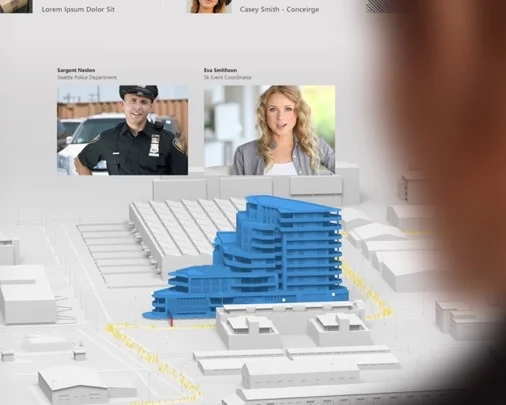
My team created this vision piece to help express the possibilities inherent in leveraging computer vision, facial and voice recognition, digital twins of physical placers, and predictive analytics in their daily activities. We imagined an ethically responsible, fully-instrumented campus and Virtual Operations Center that provided contextual, just-in-time information to the right person at the right time.
The selected security scenario included a VIP campus visit, taking place while a 5K run was underway. All recommended touchpoints were explored, as were critical personas and key service design recommendations.
I believe a digitally enabled environment should strive to resemble the very best of its traditional counterparts. That said, upon closer inspection, you’ll notice friction is eliminated, communication is seamlessly delivered, and personalization occurs effortlessly. Technology in the built environment is best when it contributes productively to the User’s understanding or experience. The built environment & industrial design must also be quietly reimagined to facilitate enabled interactions that will shortly become Users’ “new normal.”
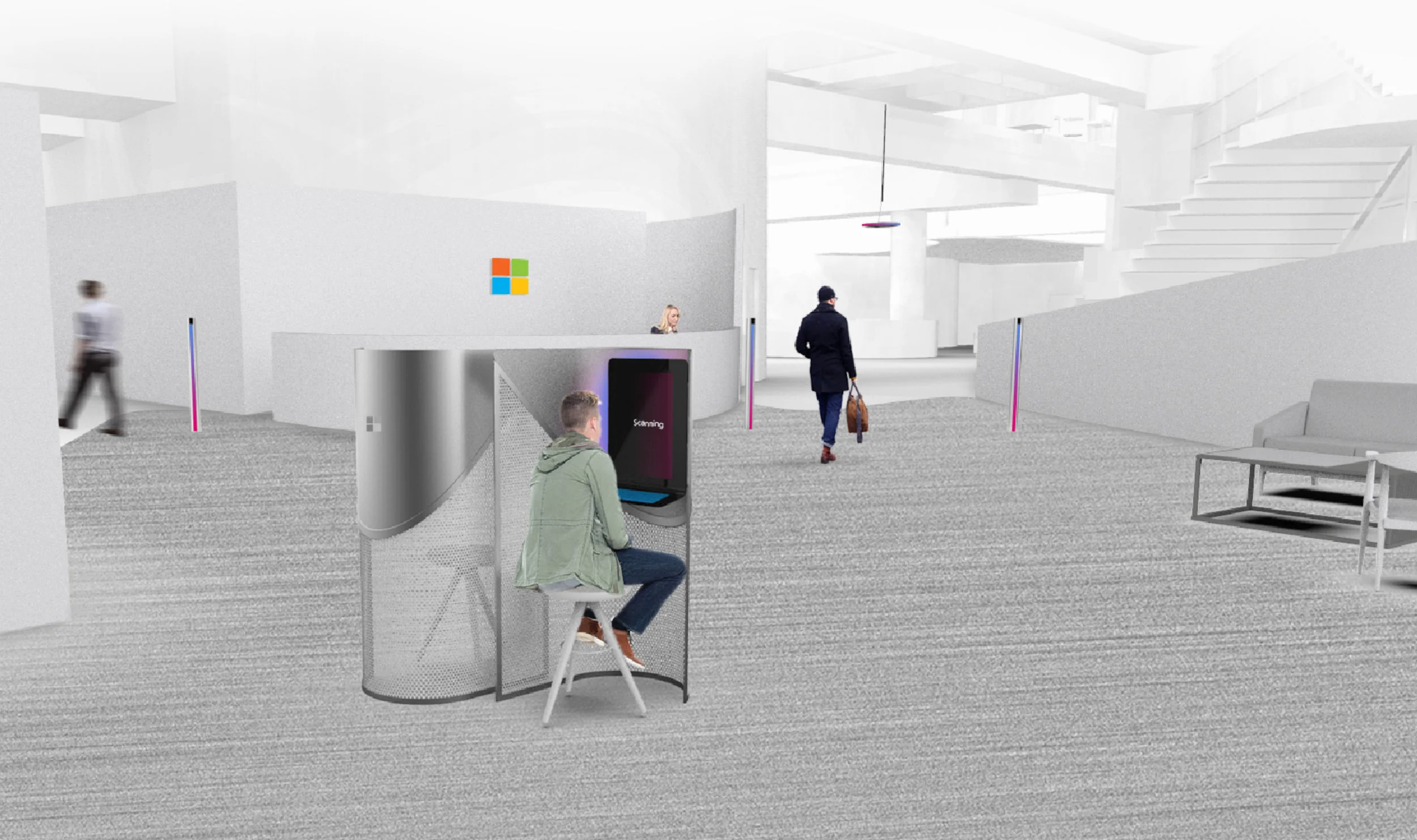
Frictionless Access was another project for Microsoft Global Security. Here, we strove to liberate Windows Hello facial recognition from the desktop, providing a truly ambient application of the identity platform.
By eliminating traditional gates and security infrastructure and relying on sensor fusion for authorized access, lobby entries become “frictionless”—more welcoming and hospitality-oriented—as well as secure.
Satya challenged the Real Estate & Security team to make our new Redmond Campus the “most connected, accessible, and sustainable” campus in the world. To assist them, the Applied Innovation Team was selected to lead the CampusNext Global Experience Strategy development, working with a cross-functional team comprised of external consultants and suppliers, internal product groups, and our own research, ethics, and digital transformation experts.
Madison Square Garden is the most famous arena in the world, but the existing Garden experience failed to live up to the mystique. Several new sports and entertainment venues in New York were challenging its historic commercial and psychological dominance. I had the privilege of leading a large multidisciplinary team in branding a multi-year transformational renovation and change both fan and partner perception.
The initial effort in this undertaking was the design of the Transformation Center—a destination that would present a compelling vision of The Garden after its $500 million renovation.
The Transformation Center narrative is anchored in our overarching brand position of "Defining Moments." The physical experience is very theatrical and highly choreographed, soliciting direct involvement from visitors. Digital interactions provide a personalized experience for those considering a suite purchase or major sponsorship, including an immersive multimedia entry chamber and a virtual reality in-seat experience. We partnered very successfully on the execution of the project with TPG Architecture, the Center's architect of record, with whom we have collaborated on several other New York projects.
Role: Creative Director, Director of Experience Strategy, Hornall Anderson
The Sydney Opera House is one of the most celebrated and recognizable buildings in the world, with over 8 million visitors, annually. It is an architectural masterpiece, a World Heritage Site and one of the busiest performing arts venues in the world. It was my distinct pleasure to lead the development of the Visitor Experience Strategy for The House.
A site-wide plan, I led a multidisciplinary team in the development of the overall strategic positioning and a holistically conceived collection of public and ticketed engagements. This diverse range of experiences featured state-of-the-art technology and the adaptive reuse of several existing venues.
Role: Creative Director, Director of Experience Strategy, Hornall Anderson
GE asked Hornall Anderson to craft a narrative framework and experience strategy to inform the design and operationalization of their Innovation Center in Calgary. I led the team that envisioned an experiential workspace filled with cutting-edge digital tools to facilitate energy industry redefining collaboration.
Once the vision was solidified, we worked with Gensler through the design of the space and were responsible for crafting all the major environmental interactive installations and content experiences.
Role: Creative Director, Director of Experience Strategy, Hornall Anderson
Please make sure to watch the video.
Hornall Anderson was the lead creative agency in a large consortium gathered by Malkin Holdings (operator and owner of The Empire State Building) to put forward a creative vision and operating plan for the visitor experience at One World Trade, the main tower at the World Trade Center site in lower Manhattan.
I led the team that envisioned a progression to the top, punctuated by cutting-edge digital technologies and effects triggered by visitors' RFID bracelets, culminating in a spectacular, view-enhancing "smart glass" observation deck.
Ultimately, our managing group was not awarded the contract, but the name we created—"The Eye of The World"—was adopted by the project, as were several of the technology engagements.
Role: Creative Director, Director of Experience Strategy, Hornall Anderson
I have such tremendous affection and respect for the Nordstrom brand and organization, both professionally and as a consumer. It has been a true highlight of my career to work with them on a significant innovation initiative.
We set about understanding their customer and competitive set, then crafted an ambitious vision for the future of their beauty department. I was the principal driver of the creative and experience strategy that integrated new digital technologies, revenue stream opportunities and customer service behaviors geared to benefit customers and improve the course of Nordstrom's beauty business.
Role: Creative Director, Director of Experience Strategy, Hornall Anderson